
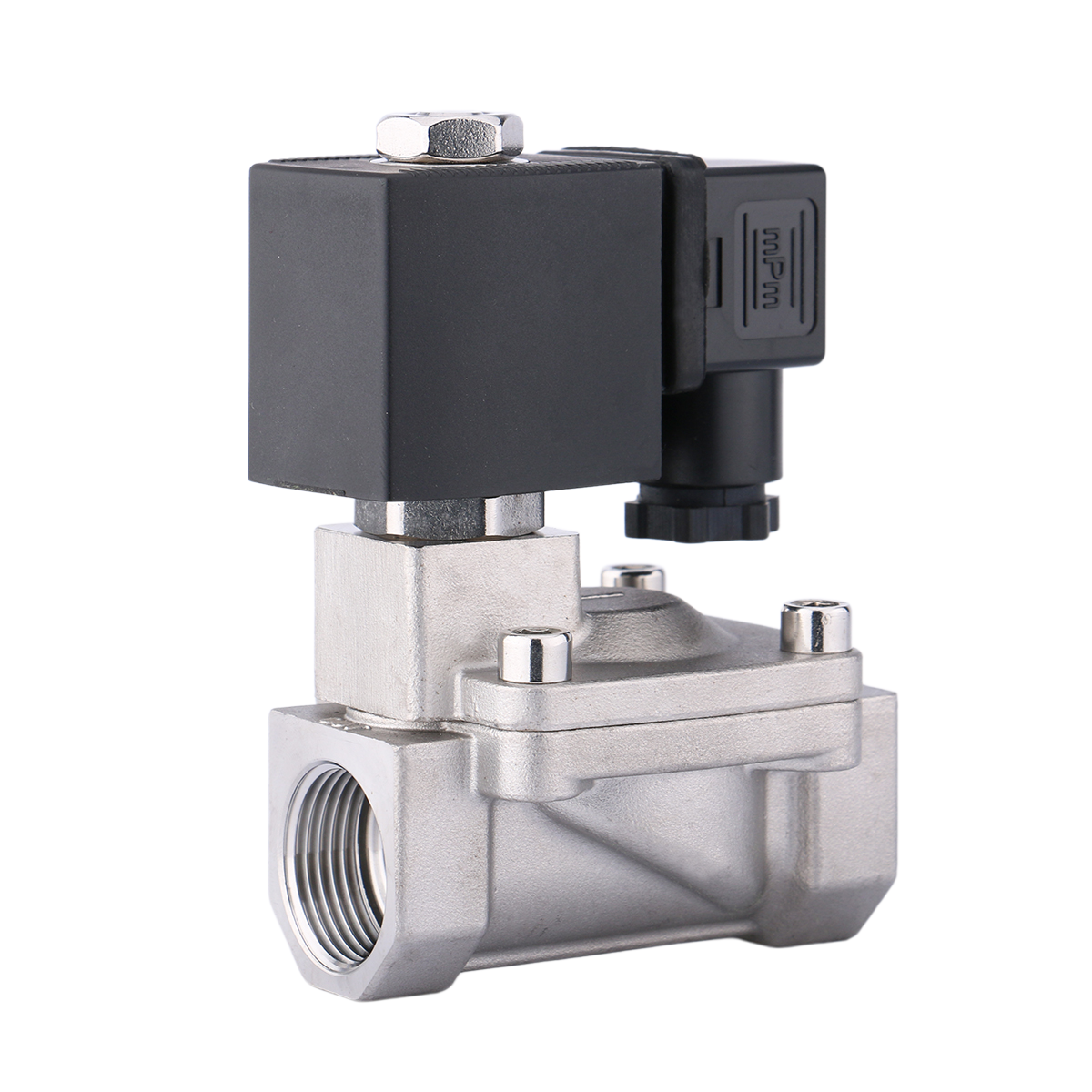
STP11 Pilot Diaphragm Stainless Steel Solenoid Valve
Model:STP11
Category:STP Pilot Piston Series
The pilot diaphragm solenoid valve is a pilot-operated + diaphragm combined 2/2-way valve, using small electromagnetic force to control the pilot valve, creating a pressure difference across the diaphragm, which drives the main valve switch. It is suitable for large bore, high flow, and medium-high pressure applications.
Technical Parameters
| Bore | DN15–DN200 (Thread/Flange) |
| Pressure | 0.03–1.6MPa (Minimum pressure difference of 0.03MPa required for startup) |
| Temperature | -5°C~80°C (PTFE up to 200°C) |
| Medium | Water, gas, oil, weak corrosive liquids (no particulate impurities allowed) |
| Voltage | AC220V, DC24V (mainstream) |
| Power Consumption | DN15–50 approx. 17VA; DN65+ approx. 50VA |
Selection & Installation Guide
- Select bore based on flow requirements; for DN50 and above, pilot diaphragm type is preferred
- Confirm that the minimum working pressure difference is ≥0.03MPa; otherwise, select direct-acting or dual-diaphragm type
- When the media contains impurities, a filter of at least 80 mesh must be installed before the valve
- Install with the valve body arrow aligned with the fluid flow direction, coil vertically upward
- For high-temperature applications (>80°C), select PTFE diaphragm material
- Keep voltage fluctuations within ±10% to prevent coil burnout